
• The Art of GrandLoving

The Art of GrandLoving
I could hardly wait to become a grandparent. My four kids all married late. Most of my peers were already grandparents, so I thought the day would never come. I even found myself volunteering to be the grand parent for other people’s kids. Not long after our kids began getting married, the grand kids began to come. Our aspirations for grand parenting were finally realized. Now there are eight grand kids!
Managing our interests in the “grands” has become a part of our daily preoccupation. Two live very close us. Four are in Baltimore. Two are grown adults, both live in California.
So the day came when Benjamin first called me “Papa,” I just melted. Sharon soon was called “Nana,” and we officially felt like grandparents.
My wife easily became a very involved “Nana.” I am, on the other hand, was an “aspiring” grandfather. However, I have decided that I wanted to be more engaged and deliberate about being a grandpa, but it was this year, that I set out to figure out ways to have some monthly involvement with our “grands.” It is work!
So here are the Twelve Things I am doing to help me maintain some constant contact.
• Grand Parenting Stats

Research: Some Stats on Grand Parenting
“By 2010 there will be more than 80 million grand parents, 33 percent more than there were in 1992. But the vast numbers of grand parents now and to come tell only part of the story. Today 82 percent of the grand parents have seen a grandchild in the past month, and 72 percent have shared a meal with or purchased a gift for a grand child within that time. Fifteen percent are regular caregivers, 3 percent are raising a grandchild, and of the rest, 44 percent see a grand child, every week. Yet fewer than half of all grand parents think it is very easy to come up with activities that a grandchild will enjoy, and 45 percent of grand folks live 200 or more miles away from at least one of their grand children.” Forward p. 9-10
Grandloving: Making Memories with Your Grandchildren, by Sue Johnson, and Julie Carlson, Third edition, Heartstrings Press, 2003
• Leaders: A Delegation Question
 Leadership: A Delegation Question
Here’s My Answer…to the Delegation Question!
Okay, here’s my question, How do you have a high standard and expect them (those you delegate to) to do less at the same time? Isn’t that expecting them “to do less” the same as having a lower standard?
Regarding your good delegation question. My answer is No! High standards are like “invisible,” no one really sees them, but you. When you work with someone, you start with them where they are. (Like, I do when I work with you.) You might never know how high my standard really is, until I reveal it to you and even then, I might hold back some of it. Meanwhile, I focus on where you “are” now. Then I try to get you to move forward and up, when I can. If you reveal all of your high standard and start with that, no one would respond to your delegation. It might be just too high. They have to be successful with what they are willing to do for you. They have to try it. It has to work for them.
It is a tension, admittedly, but it is the same way you work with someone much younger, you “bring them along,” over time. At first, you focus on making the relationship work and accommodate your standards as the experience level increases. This is a very common experience for me in coaching. There are plenty of “aha” moments when the student begins to “get it.” Then we can go to another level. (so now you see… what I am doing with you. (Ha-ha)
So the more experience you have as a leader, the more that you can offer them. Then you can coach them to where you want to influence them to go. For example, I can see your potential. I can see what you could be doing. I have this long-term view of ministry that is now 50 years old. I see you in ways you cannot see yourself now. So, if I become your long-term coach, you will be ramping up, jumping higher, and maybe raising the bar, or going farther than either of us could have imagined in the beginning, one step at a time.
So how is that for explaining the tension between high and low standards? Don’t be afraid of this, I just focus on what is the next step. That is what coaching involves, no skipping of steps, but finding ways to be accountable for moving forward and up.
• Sixteen Steps to the Next Level

Sixteen Steps To The Next Level
What follows are my Sixteen Steps that will provide a basis to move your children’s ministry to the next level. It is admittedly, impossible to work on all these steps at one time. However, if you would make it your ambition to seriously work on these steps your will definitely see upward movement in your children’s ministry. Plus, those in authority over you will take notice.
1. Get a personal ministry Coach and get an accountability relationship.
This is the most active way to take your ministry and leadership to the next level. Find a person, usually older and more experienced, who will get to know you and your ministry. Together you forge an accountability relationship that challenges you to work on your dreams and vision. Wish I had done this years earlier.
2. Read one book a month on leadership or children’s ministry.
To begin to change your mindset that takes you to the next level of leadership, I recommend that you begin to take seriously the mandate to become a reading leader. You must surround yourself with input so that you are not just resting upon former academic work. Make it your goal to be a life-long learner.
3. Develop your middle management team.
This is the group of leaders that oversee all the large areas of your ministry responsibility. They become your leadership team. You regularly plan, confer and delegate the execution of the ministry. This team could manage the ministry should you be ever be unavailable or should you get the Call to leave.
4. Take as many leadership skill assessment tests as possible.
I maintain that the better you know yourself and your own leadership issues, the better you will be in adjusting your leadership style of those over you and under you. You will able to discern who to ask for what and who is competent and capable to lead and serve. (For example: DiSC, Myers Briggs, Leadership Styles, Taylor Johnson, Modified Houts Spiritual Gifts, Strength Finder—to name a few.)
5. Adopt a Mentor, someone that you aspire to emulate.
This may be a real person, or a person whose work you read about and emulate. It might be a person from who you seek wisdom and ask questions. This person is not your coach. However, this person is one to whom you look up to, respect and admire. Maybe you only know this person second hand, not in person.
6. Expand your skill set by learning more performing arts skills.
Typically, these are the up-front stage skills, i.e., storytelling, drama, clowning, puppetry, ventriloquism, juggling, gospel magic, object lessons to name a few. The more you increase your skill set the more you can attract and hold the attention of children that you want to influence for Christ. You must add to your skill set deliberately, at least, you should learn enough so that you can encourage and support interested leaders under you.
There are ten more steps here….
• Growth by Extension

Growth by Extension
On my last trip to Baltimore to visit the grand kids, we had some free time, so we gathered up the kids and went for a walk and bike ride up the street from my son’s home. We stopped at a large grass area that the road circled around. In the center of the grass area was a rather large evergreen pine tree that my oldest grandson wanted to climb. Having my camera with me he wanted me to take some photos of him climbing up the tree. As I got closer to the tree I noticed something about the tree I had never noticed about a pine tree before. All the tips of the limbs were a different color green than the branches. This indicated new growth. I understand that pine trees grow out from the branch tips this way, but what struck me was all the new growth was obviously a lighter color green. All the tips were a visual extension of the old darker pine needle branches.
Growth by Extension is a curious anomaly. Spring is the season for this new growth, but it was coming right off the end of the branches, all the branches. The whole tree was brilliantly displaying the new lighter green on all the tips of the branches. I guess, if it were not a lighter color, just the normal green color of the more aged branches, I would not have observed it. I took some pictures of Ben and several of the tree branches with the light green tips.
However, I have been thinking about the kind of new growth that builds upon the former growth and by its extension is quite observable to all. It reminded me of my coaching experiences with children’s ministry leaders. They each represent a certain standard of growth before I get involved with them. However, after working with me a while, as their coach, they experience some new growth that becomes an extension of their former growth. This new growth in their leadership ability is also obvious to all who know them—especially, to those who are close enough to observe it.
So Here are a few of my observations about personal growth and leadership taken from a Pine Tree:
• Spencer’s Homemade Mask

Spencer’s Homemade Mask
Just thought you would like to see some of the creativity of my four-year grandson Spencer, who made this cool mask out of K’nexs. Early one morning I was checking to see if the boys were up yet. Going to their bedroom I was greeted by Spencer who wanted me to see this funny mask that he made himself. Pretty scary, right? This was taken on my last trip to Baltimore to visit the four grand kids.
• A Milestone: 300 Blogs

I have been blogging for a while now and just hit the 300th post on this site. At first, you might not be too impressed with this personal achievement, but I want to say, that I am not just adding fluff and trivia to this blogging exercise. I am rather trying to add some quality and content for those who are interested in learning and growing in their children’s ministry leadership. So today, I am taking note that these 300 blogs represents a considerable effort for me in writing. Hopefully, you will find something here that is really helpful to you and your ministry to children. I really want to make a contribution to those who come here. Yahoo!
• Holy Discontent
Holy Discontent: A Book Review
Holy Discontent: Fueling the Fire That Ignites Personal Vision By Bill Hybels, Zondervan Publishers, 2007, 149 pages
Holy Discontent is another life-changing book that just might clarify and solidify your calling from God. At first, I was wondering just how this volume would impact me. But I soon realized that Bill Hybil was unpacking some of my story.
What drives leaders to embark on a relentless mission for God? Passionate purpose is illustrated with leaders like Moses, Mother Teresa, Nehemiah, Ghandi and even stories from Bill Hybil’s life story.
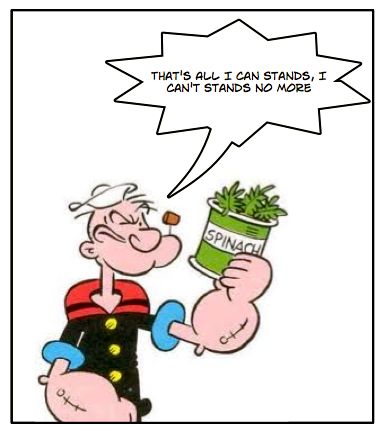
Having grown up with now famous classic cartoon like Popeye, I recalled his famous line that preceded his going for the spinach. “That’s all I can stands, I can stands no more!” This Popeye Moment illustrates what Bill Hybil calls Holy Discontent.
I recommend this book to help you, not only find your own personal area of Holy Discontent, but to fight for and follow it, even when it takes some mid-course turns.

• Leaders: Taking Risks #12

Leadership: Taking Risks
Taking risks in leadership can be portrayed as reckless abandon, thoughtless, and impetuous decision making that involves danger. However, risk taking that is thoughtful, calculated and purposeful with due consideration to the amount of risk, is to be preferred option. All change involves some risk.
However, only doing what is safe, doing only what is in your comfort zone, might just keep you from trying anything new. Being willing to try to raise the bar, to do a new thing can help us move forward. Maintaining the status quo might have no risk at all. Growth, almost by definition, requires expansion, movement and progression. Without anything new we could just be doing the minimum, just getting by. That could be done, without any risk at all.
I think we must really see the value of risk. Risk, not for just risk sake, but risk that is both calculated and purposeful. We lead by our willingness to try something that might work. It is not “all or nothing.” It is effort, which can be rather experimental in nature. Taking a series of smaller risk moves, can prepare you for a larger calculated risk. This is a better leadership position, and is to be emulated.
Can you discern the degree of risk involved in the following phrases?
• Threading the Pearls

Threading the Pearls
I am not sure that you have ever made a pearl necklace. Of course, to make a necklace, you have to have a good supply of pearls, some strong nylon thread, and a needle to insert the pearls onto the thread.
We could liken your pearls to the segments of your message: that could include the magic tricks, object lessons, visuals parts that make up your visualized message presentation. Thus, the message consists of a collection of pearls connected together by transitions that move the audience from the previous unit to the next in some seamless way. Your message is just like the whole necklace, which is made up of the sum of the parts.
One of the problems performers have in their message development is what is done between the pearls (message units). We call these transitions. The purpose of the transition is to take the attention gained from the first effect and transition it to the next visual effect (or magic trick).
This can be problematic because you can loose the eye focus of the children in the bad transitions. So the presentation comes off like a collection of pearls with inadequate transitions. It is a lot more work to recapture the lost attention. We usually depend upon the effect to hold the attention, but we can too easily loose it in the transition.
So what is the remedy for holding the pearls together? What does this is a very tight gathering of the pearls on the nylon or wire. It is all most seamless from one pearl to the next.
Here are some practical remedies to help you plan your transitions…